
Sleep is often treated as optional in modern lifestyles, especially when people focus on diet and exercise for weight loss. However, scientific research consistently shows that sleep is one of the most important regulators of metabolism, hormonal balance, and fat storage.
Even with a perfect diet and consistent workouts, poor sleep can slow down weight loss, increase cravings, and reduce energy expenditure. Understanding how sleep influences metabolism can help you optimize your results in a sustainable, health-focused way.
This article explores the biological mechanisms behind sleep and metabolism, and provides practical strategies to improve sleep quality for better weight management.
The Link Between Sleep and Metabolism
Metabolism refers to all the chemical processes that convert food into energy. It includes basal metabolic rate (BMR), digestion, and physical activity energy expenditure.
Sleep plays a regulatory role in all of these processes. During sleep, the body shifts into repair and restoration mode, balancing hormones and optimizing cellular function.
When sleep is insufficient or disrupted, the body enters a stress state that negatively affects metabolism. This can lead to:
- Reduced calorie burning
- Increased fat storage
- Higher appetite
- Poor glucose regulation
Over time, chronic sleep deprivation may contribute to weight gain and metabolic disorders.
Hormones That Control Hunger and Weight
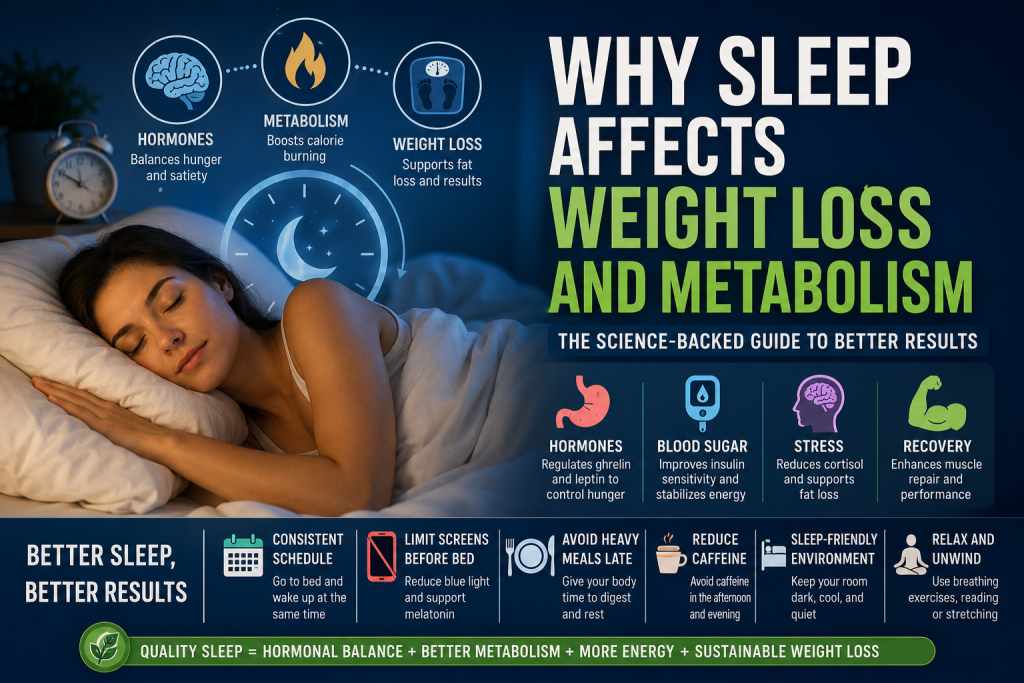
One of the strongest connections between sleep and weight loss is hormonal regulation. Two key hormones are especially affected:
1. Ghrelin – The Hunger Hormone
Ghrelin stimulates appetite. When sleep is insufficient, ghrelin levels increase, making you feel hungrier throughout the day.
2. Leptin – The Satiety Hormone
Leptin signals fullness to the brain. Poor sleep reduces leptin levels, meaning your brain receives weaker signals that you are full.
The combination of increased ghrelin and decreased leptin leads to:
- Stronger cravings for high-calorie foods
- Increased snacking
- Overeating, especially carbohydrates and sugars
This hormonal imbalance is one of the main reasons sleep deprivation is linked to weight gain.
Sleep and Insulin Sensitivity
Insulin is the hormone responsible for regulating blood sugar levels. Good insulin sensitivity allows your body to efficiently use glucose for energy instead of storing it as fat.
Lack of sleep reduces insulin sensitivity, meaning:
- Blood sugar levels stay higher for longer
- The body stores more fat
- Energy crashes become more frequent
Over time, this can increase the risk of metabolic syndrome and type 2 diabetes.
Cortisol: The Stress Connection
Cortisol is the body’s primary stress hormone. It naturally follows a daily rhythm, but poor sleep can elevate cortisol levels.
High cortisol levels contribute to:
- Increased abdominal fat storage
- Higher appetite, especially for comfort foods
- Reduced muscle recovery
- Slower metabolism
Chronic sleep deprivation keeps the body in a mild stress state, making weight loss significantly more difficult.
Circadian Rhythm and Metabolic Timing
The circadian rhythm is the body’s internal clock that regulates sleep, hormones, digestion, and energy use.
When sleep patterns are irregular (late nights, shift work, inconsistent schedules), the circadian rhythm becomes disrupted. This leads to:
- Reduced metabolic efficiency
- Poor digestion timing
- Increased fat storage
- Lower energy levels during the day
Eating late at night, combined with poor sleep, further disrupts metabolic balance.
How Sleep Affects Fat Burning
During deep sleep stages, the body performs essential metabolic functions:
- Growth hormone release (important for fat metabolism and muscle repair)
- Cellular repair and detoxification
- Energy restoration
If deep sleep is reduced, the body misses these critical processes, which can slow fat burning and recovery from exercise.
Muscle Recovery and Body Composition
Weight loss is not just about losing fat—it is also about preserving muscle mass. Muscle tissue increases metabolic rate because it burns more calories at rest.
Sleep is essential for muscle recovery because:
- Protein synthesis increases during deep sleep
- Growth hormone supports tissue repair
- Inflammation is reduced
Poor sleep leads to slower recovery, reduced workout performance, and potential muscle loss over time.
Sleep Deprivation and Cravings
One of the most immediate effects of poor sleep is increased cravings for high-calorie foods.
Research shows that sleep-deprived individuals are more likely to choose:
- Sugary snacks
- Fast food
- Processed carbohydrates
This happens because the brain’s reward system becomes more active, while self-control centers become less efficient.
As a result, even small sleep deficits can lead to significant changes in eating behavior.
How Much Sleep Do You Really Need?
Most adults need between 7 and 9 hours of quality sleep per night. However, quality is just as important as quantity.
Signs of poor sleep quality include:
- Frequent waking during the night
- Feeling tired even after 7–8 hours
- Difficulty concentrating during the day
- Increased hunger and cravings
Consistency is key. Going to bed and waking up at similar times daily helps stabilize metabolism.
Practical Tips to Improve Sleep and Support Weight Loss
Improving sleep does not require drastic changes. Small adjustments can significantly improve metabolic health.
1. Maintain a consistent sleep schedule
Go to bed and wake up at the same time every day, even on weekends.
2. Limit screen exposure before bed
Blue light from phones and computers can suppress melatonin production.
3. Avoid heavy meals late at night
Eating too close to bedtime can disrupt digestion and sleep quality.
4. Reduce caffeine intake in the afternoon
Caffeine can remain in your system for several hours.
5. Create a sleep-friendly environment
Keep your bedroom dark, cool, and quiet.
6. Incorporate relaxation routines
Reading, breathing exercises, or light stretching can improve sleep onset.
Nutrition, Sleep, and Metabolism Connection
What you eat can also influence sleep quality and metabolism. Nutrient-dense foods support better hormonal balance and recovery.
For example, certain whole food compounds and micronutrient blends may support cellular energy production and overall metabolic function. You can explore related nutritional insights in these articles:
- What Is Tre-en-en and How Does It Support Cellular Health?
- Carotenoid Complex Benefits for Eye Health and Immunity
- Omega-3 Salmon Oil Plus Review: Heart, Brain and Joint Support
- Formula IV Review: A Whole Food Multivitamin Explained
These topics help build a broader understanding of how nutrition supports metabolism, cellular repair, and long-term energy balance.
Sleep as Part of a Bigger Metabolic Strategy
Sleep should not be viewed in isolation. It works together with diet, exercise, and stress management to regulate body composition.
For a more complete understanding of metabolism and energy balance, you can also explore:
- How to Improve Metabolism Naturally
- 7 Habits That Increase Energy Throughout the Day
- Best Foods for Digestion and Gut Health
- Signs of a Slow Metabolism and What You Can Do About It
Together, these topics form a holistic approach to metabolic health.
Final Thoughts
Sleep is one of the most underestimated factors in weight loss and metabolic health. It influences hormones, appetite, insulin sensitivity, stress levels, and even food choices.
While diet and exercise are essential, neglecting sleep can significantly reduce your results. Improving sleep quality is not just about rest—it is a metabolic optimization strategy.
By prioritizing consistent, high-quality sleep, you support your body’s natural ability to burn fat, regulate energy, and maintain long-term health.
For those looking to build a complete wellness strategy, explore our related guides:
- How to Improve Metabolism Naturally
- Best Foods for Digestion and Gut Health
- 7 Habits That Increase Your Energy Throughout the Day
- What Is Tre-en-en and How Does It Support Cellular Health?
- Formula IV Review: A Whole Food Multivitamin Explained
- Carotenoid Complex Benefits for Eye Health and Immunity
- Omega-3 Salmon Oil Plus Review: Heart, Brain and Joint Support
- Pro Vitality Plus Review: Benefits, Ingredients, and Complete Guide
- Kal-Mag Plus D Review
- Full Motion Joint Support Review
Together, these resources provide practical, science-based information to help you improve nutrition, support cellular health, maintain energy, and develop habits that promote long-term wellness.