
Understanding how to improve metabolism naturally is essential for maintaining consistent energy levels, supporting healthy body composition, and promoting long-term wellness. Metabolism refers to all chemical processes in the body that convert food into energy. However, this process is not fixed and can be influenced by lifestyle, nutrition, sleep, stress levels, and physical activity. Therefore, improving metabolism is not about extreme diets or quick fixes, but about building sustainable habits that support cellular function and energy production over time.
Additionally, nutrients such as omega-3 fatty acids play an important role in supporting metabolic balance, cardiovascular health, brain function, and inflammation regulation. In modern lifestyles, where processed foods and sedentary habits are common, understanding how to improve metabolism naturally becomes even more important for maintaining overall health.
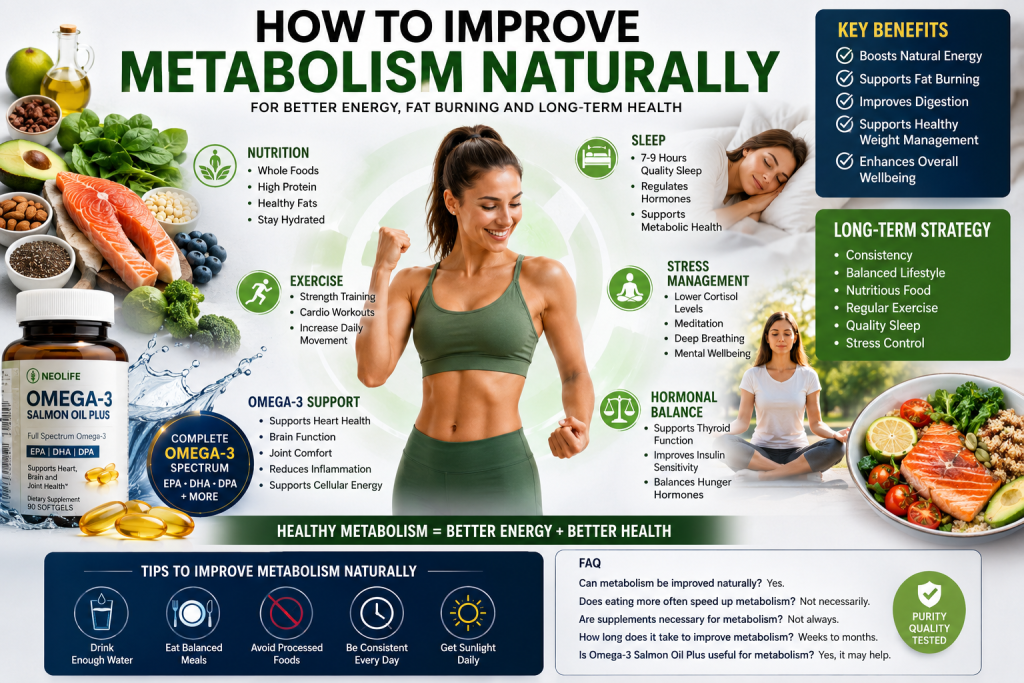
What Metabolism Really Means and Why It Matters
Metabolism is the sum of all biochemical reactions in the body that sustain life. These reactions convert food into usable energy and support essential functions such as breathing, digestion, circulation, and temperature regulation. Therefore, metabolism is directly linked to how energetic, focused, and physically capable you feel on a daily basis.
Metabolism includes two major processes. Catabolism breaks down nutrients to release energy, while anabolism uses that energy to build and repair tissues. However, both processes depend on nutrient availability, hormonal balance, and lifestyle factors.
Additionally, metabolism determines how efficiently the body processes carbohydrates, fats, and proteins. A healthy metabolic system supports stable energy, better weight control, and improved overall performance.
Basal Metabolic Rate and Individual Differences
Basal Metabolic Rate (BMR) represents the number of calories the body burns at rest to maintain essential functions. It varies significantly from person to person. For example, individuals with higher muscle mass typically burn more calories even when inactive because muscle tissue requires more energy than fat tissue.
However, BMR is not fixed. It can be influenced by diet, activity level, sleep quality, stress, and hormonal health. Therefore, improving metabolic rate naturally is possible through consistent lifestyle changes.
Key Factors That Influence Metabolism
Several factors directly impact how fast or slow metabolism functions. Age is one of the most important factors, as metabolic rate tends to decrease over time. However, lifestyle choices often have a much stronger influence than age alone.
Muscle mass plays a major role in metabolic rate. More muscle leads to higher energy expenditure. Sleep quality also affects hormonal balance, which directly influences metabolism. Stress levels are equally important because chronic stress can disrupt hormonal regulation and slow down energy use.
Additionally, nutrition is one of the most powerful tools for metabolic control. The types of food consumed, meal timing, and nutrient density all contribute to metabolic efficiency.
How to Improve Metabolism Naturally Through Daily Habits
One of the most effective ways to improve metabolism naturally is through consistent daily habits. Small changes, when applied long-term, can significantly enhance energy production and metabolic efficiency.
Physical Activity and Strength Training
Exercise is one of the most powerful metabolic boosters. Strength training is especially effective because it increases muscle mass, which raises resting calorie burn. For example, even two to three strength training sessions per week can positively impact metabolic rate.
Additionally, aerobic exercises such as walking, running, cycling, or swimming improve cardiovascular efficiency and support fat metabolism. Furthermore, increasing general daily movement, such as walking more or reducing sitting time, also contributes to better metabolic health.
Sleep Quality and Metabolic Function
Sleep plays a critical role in regulating metabolism. During sleep, the body restores hormonal balance, repairs tissues, and regulates energy systems. However, poor sleep can disrupt hormones such as insulin, leptin, and cortisol, which directly affects appetite, fat storage, and energy levels.
Therefore, getting between seven and nine hours of quality sleep per night is essential for metabolic optimization. In addition, maintaining a consistent sleep schedule supports long-term hormonal stability.
Stress Management and Hormonal Balance
Chronic stress is one of the most overlooked factors affecting metabolism. When stress levels remain elevated, cortisol increases, which can lead to fat storage, reduced energy efficiency, and disrupted hunger signals.
For example, individuals under constant stress often experience cravings for high-calorie foods and reduced motivation for physical activity. Therefore, stress management techniques such as meditation, breathing exercises, and relaxation routines are essential for metabolic health.
Nutrition Strategies for Improving Metabolism Naturally
Nutrition has a direct and powerful influence on metabolism. The body requires adequate nutrients to produce energy efficiently, regulate hormones, and support cellular processes.
Protein Intake and Thermic Effect of Food
Protein has a higher thermic effect compared to fats and carbohydrates. This means the body uses more energy to digest and process protein. Therefore, increasing protein intake can slightly enhance metabolic rate while supporting muscle maintenance and recovery.
Additionally, protein helps stabilize blood sugar levels and reduces overeating, which indirectly supports metabolic balance.
Hydration and Energy Production
Water is essential for every metabolic reaction in the body. Even mild dehydration can reduce energy levels and slow down metabolism. Therefore, maintaining proper hydration is a simple but powerful strategy for metabolic support.
Furthermore, drinking water before meals may support digestion and appetite regulation.
Whole Foods and Nutrient Density
Whole foods such as vegetables, fruits, legumes, whole grains, nuts, and seeds provide essential vitamins and minerals required for metabolic enzyme function. However, processed foods often lack these nutrients and may negatively affect energy balance.
Therefore, prioritizing whole, nutrient-dense foods is essential for long-term metabolic health.
Omega-3 Fatty Acids and Metabolic Support
Omega-3 fatty acids are essential nutrients that play a key role in cellular function, inflammation regulation, and energy metabolism. Therefore, they are often included in strategies focused on how to improve metabolism naturally.
Omega-3s are integrated into cell membranes, where they help regulate nutrient transport and improve communication between cells. Additionally, they support heart, brain, and joint health, which are all indirectly connected to metabolic efficiency.
Omega-3 Salmon Oil Plus and Cellular Health
Omega-3 Salmon Oil Plus is a broad-spectrum omega-3 supplement that provides EPA, DHA, and DPA in a balanced formula. Unlike standard fish oil products that focus mainly on EPA and DHA, this formula offers a more complete omega-3 profile.
EPA supports cardiovascular function and circulation, DHA supports brain and nervous system health, and DPA contributes to overall fatty acid balance. Furthermore, these fatty acids work together to support cellular function and energy metabolism.
However, supplementation should always be combined with a healthy diet and lifestyle rather than used as a replacement.
Omega-3 and Cellular Energy Efficiency
Omega-3 fatty acids become part of cell membranes, influencing how efficiently cells produce and use energy. As a result, they may indirectly support metabolism by improving cellular communication and reducing inflammation.
Hormonal Regulation and Metabolism
Hormones play a major role in controlling metabolism. Therefore, maintaining hormonal balance is essential for stable energy and healthy body composition.
Thyroid Function and Energy Balance
The thyroid gland regulates metabolic rate. When thyroid activity is low, metabolism slows down, leading to fatigue, weight gain, and low energy levels. However, proper nutrition and lifestyle habits can support thyroid function.
Insulin Sensitivity and Metabolic Efficiency
Insulin regulates how the body uses glucose for energy. When insulin sensitivity is high, the body uses energy more efficiently. However, poor diet and inactivity can reduce insulin sensitivity over time.
Long-Term Strategy for Metabolic Health
Improving metabolism naturally requires consistency rather than short-term effort. Therefore, long-term habits are more effective than temporary diets.
A balanced approach that includes exercise, nutrition, sleep, stress management, and optional supplementation creates the strongest foundation for metabolic health.
Common Mistakes That Slow Down Metabolism
Several lifestyle habits can negatively affect metabolism. For example, chronic dieting, skipping meals, and lack of physical activity can reduce metabolic efficiency over time.
Additionally, insufficient sleep and chronic stress further contribute to hormonal imbalance and reduced energy production.
FAQ How to Improve Metabolism Naturally
Can metabolism be improved naturally
Yes, metabolism can be improved through consistent lifestyle habits such as exercise, proper nutrition, sleep, and stress management. However, results develop gradually over time.
Does eating more often speed up metabolism
Not necessarily. Total calorie intake and food quality are more important than meal frequency.
Are supplements necessary for metabolism
Not always. However, omega-3 supplements may support overall metabolic and cellular health when dietary intake is insufficient.
How long does it take to improve metabolism naturally
Noticeable improvements in energy and metabolic balance may take several weeks to several months depending on consistency.
Is Omega-3 Salmon Oil Plus useful for metabolism
It may support metabolism indirectly through improved cellular function, inflammation balance, and overall nutritional support.
Conclusion How to Improve Metabolism Naturally
Learning how to improve metabolism naturally is about building sustainable habits that support long-term energy production and cellular health. Therefore, regular exercise, quality sleep, balanced nutrition, and stress management form the foundation of metabolic wellness. Additionally, omega-3 fatty acids, including those found in Omega-3 Salmon Oil Plus, may contribute to improved cellular efficiency and overall health support. However, the most important factor is consistency. Over time, these habits work together to support a healthier, more efficient metabolism and better overall well-being.
Recommended related articles
Pro Vitality Plus Review: Benefits, Ingredients, and Complete Guide
Formula IV NEOLIFE Review: A Whole Food Multivitamin Explained
Omega-3 Salmon Oil Plus Review: Heart, Brain and Joint Support
What Is Carotenoid Complex and How Does It Support Eye Health and Immunity?
What Is Tre-en-en and How Does It Support Cellular Health?
KAL-MAG PLUS D REVIEW – COMPLETE GUIDE TO BONE AND MINERAL HEALTH SUPPORT
FULL MOTION JOINT SUPPORT REVIEW – COMPLETE GUIDE TO JOINT HEALTH SUPPORT